
For years, most ecommerce brands had the same diversification problem. Meta was the obvious growth engine. Google was the logical second layer. And after that, things got messy fast. You could test other channels. You could spread budget around. You could hope something stuck. But very few platforms actually earned their place next to Meta.
That is why so many brands are paying attention to Axon.
Not because it is trendy. Not because it is some magical replacement for Meta. But because it is one of the first newer platforms that feels like it can actually deliver what most brands want from diversification in the first place: more reach, more scale, and more new customers without forcing you into a completely broken workflow.
This isn’t a replacement, it is another serious acquisition channel to your stack.
Why Axon Is Getting So Much Attention
Axon is powered by AppLovin, a company that originally built its advertising machine around mobile games. That matters more than it might seem. Instead of trying to build an ad platform from scratch for ecommerce, AppLovin spent years training its system in an environment where it had enormous scale, constant behavioral data, and a huge volume of attention. Then it opened that same infrastructure to ecommerce advertisers.
That means you are not testing into a tiny beta network with no real volume behind it. You are plugging into a platform with a massive daily user base, a mature algorithm, and a very different attention environment than the one you are used to on Meta. And that attention environment is one of the reasons Axon feels so different.
Why the User Experience Matters So Much
When someone sees your ad on Meta, they are almost always in scroll mode. They are moving quickly. They are filtering aggressively. They are not there to study your product. Axon works differently.
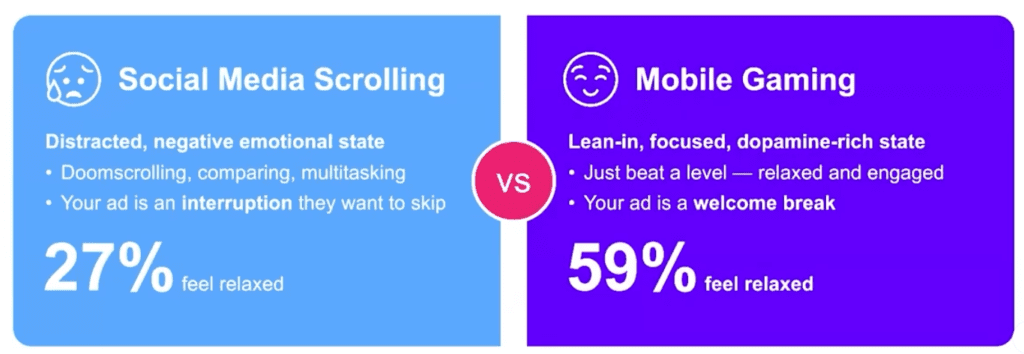
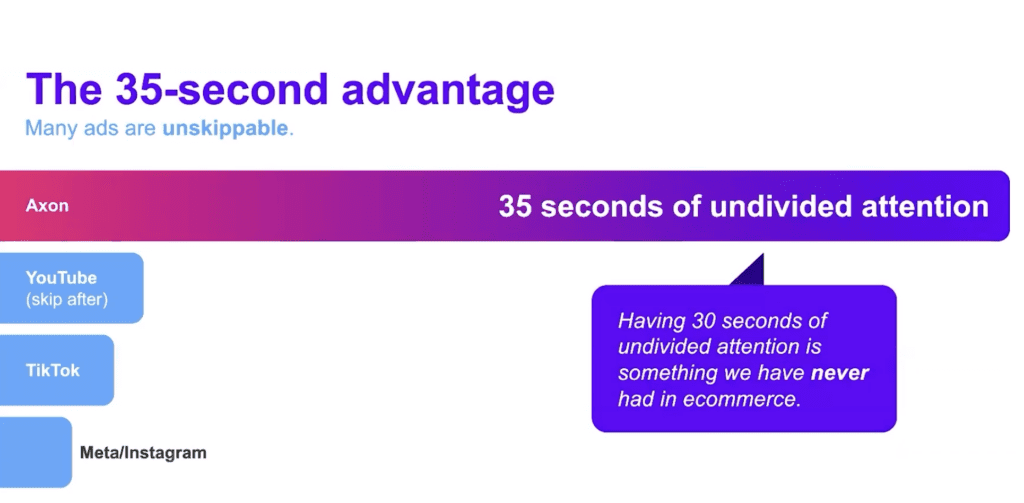
The ad experience often shows up inside mobile games, which creates a very different state of mind. Users are not endlessly doomscrolling. They are already engaged. They are focused. And when the ad appears, it lands in a moment where attention is more available than it is on most social platforms. That is why so many advertisers are drawn to the format. You are not fighting for a half-second thumb stop. You are stepping into a customer journey that gives you room to actually communicate. The average view time for an Axon ad is 35 seconds, which is astonishing compared to social media ads’ 2.4 second average time.
That does not mean the creative can be lazy. It means the platform gives strong creative more room to work.
The Structure of an Axon Ad
One of the biggest mental shifts with Axon is understanding that it is not just a single ad unit. It is more like a mini funnel.
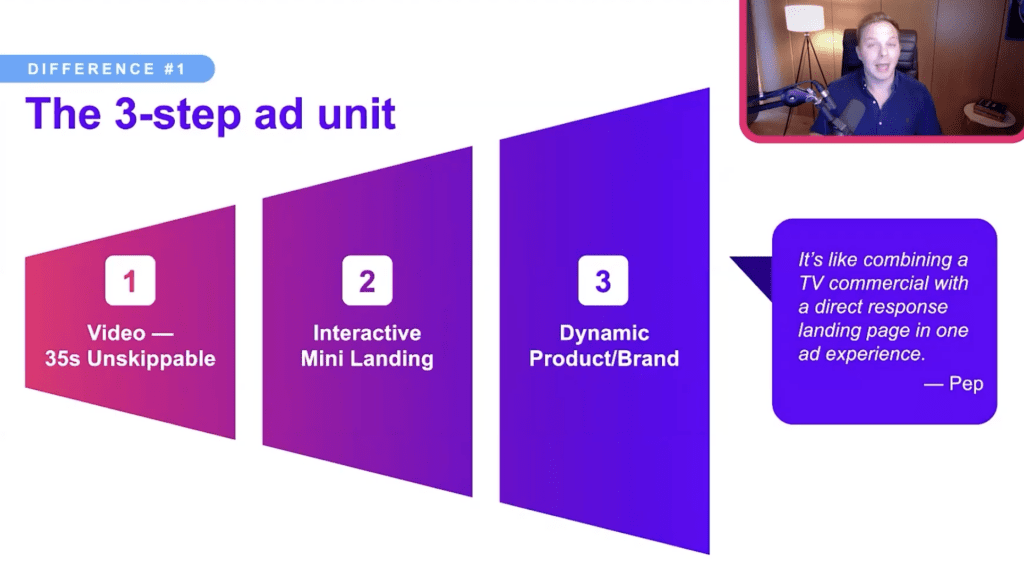
- The first step is the video. This is the main attention-grabber and usually the part advertisers focus on first.
- The second step is the interactive, which often functions like a static or lightly animated follow-up visual. This is your chance to reinforce the transformation, the offer, or the value prop after the viewer has already engaged with the video.
- The third step can include dynamic product ads or brand assets, depending on how the campaign is configured.
In other words, you are not relying on one impression to do all the work.
You are building a sequence.
That is a very different way to think about paid traffic, and it is one of the reasons Axon can feel so powerful when you get the inputs right.
The Goal Is Not to Move Budget Off Meta
This is where a lot of people get the strategy wrong. Axon is not interesting because it gives you an excuse to stop advertising on Meta. Meta is still one of the strongest paid traffic platforms in the world. For most brands, it remains the foundation.
The real opportunity with Axon is that it can sit beside Meta and help you diversify where your new customers come from. That matters more than ever. When all of your paid acquisition depends on one platform, every algorithm shift feels like a threat. Every CPM spike feels personal. Every bad week feels bigger than it should.
Diversification is not just about more channels for the omnichannel presence. It is about more resilience to platform fluctuations. If Axon can bring in new customers at economics that make sense, it deserves a seat at the table.
Why Axon Is Easier to Launch Than Most People Expect
One of the surprising things about Axon is how little friction there is in setup compared to older ad platforms. You are not dealing with the same level of complexity you see inside Meta. There are fewer layers. Fewer levers. Fewer places to get lost.
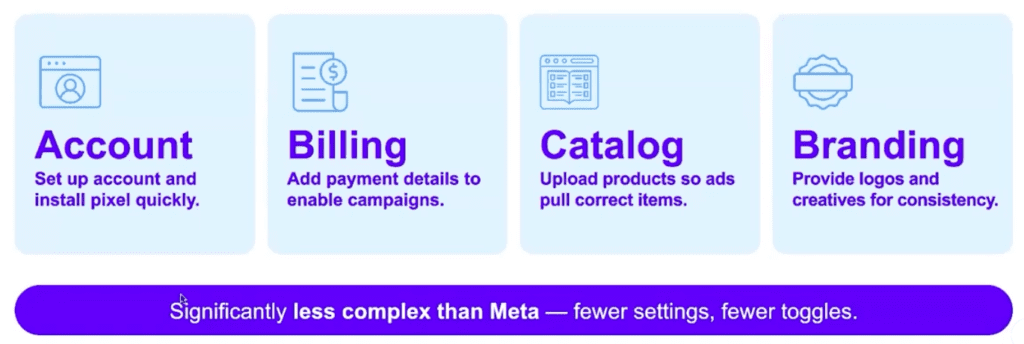
That simplicity can throw people off at first because we are so used to equating “more controls” with “more strategy.” But the lack of clutter is actually one of the platform’s strengths. The setup is straightforward enough that many brands can get their first campaign live quickly once the basics are handled.
That includes:
- Making sure the pixel is installed correctly
- Connecting your catalog if needed
- Setting your campaign goal
- Choosing your optimization window
- Adding your creative
- Launching
The First Decision: ROAS or Cost Per Purchase
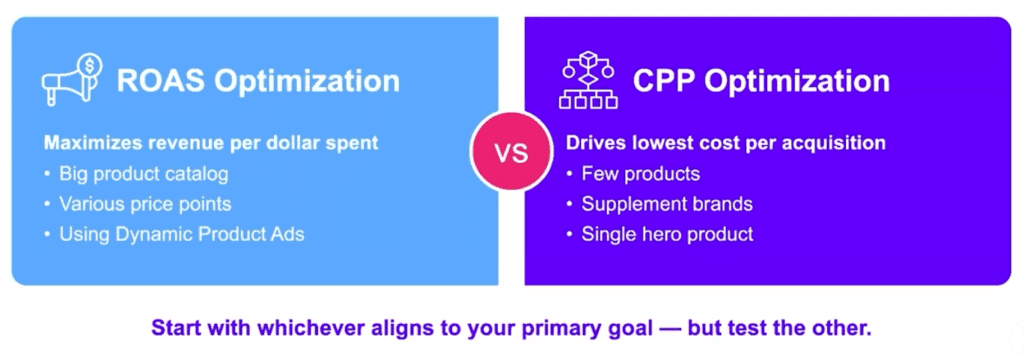
When you build your first Axon campaign, one of the first decisions is how you want the system to optimize. You are usually choosing between return on ad spend or cost per purchase. If your business has a wide catalog with very different price points, optimizing to ROAS often makes more sense. That gives the platform room to account for a $50 product behaving differently than a $250 product.
If your catalog is tighter and your products are priced fairly similarly, cost per purchase can be a cleaner place to start. The important thing is not to obsess over picking the perfect option. The important thing is to pick the one that best matches your current business model, launch, and then test the other one after you have data. Axon rewards action more than overthinking.
Universal vs Prospecting
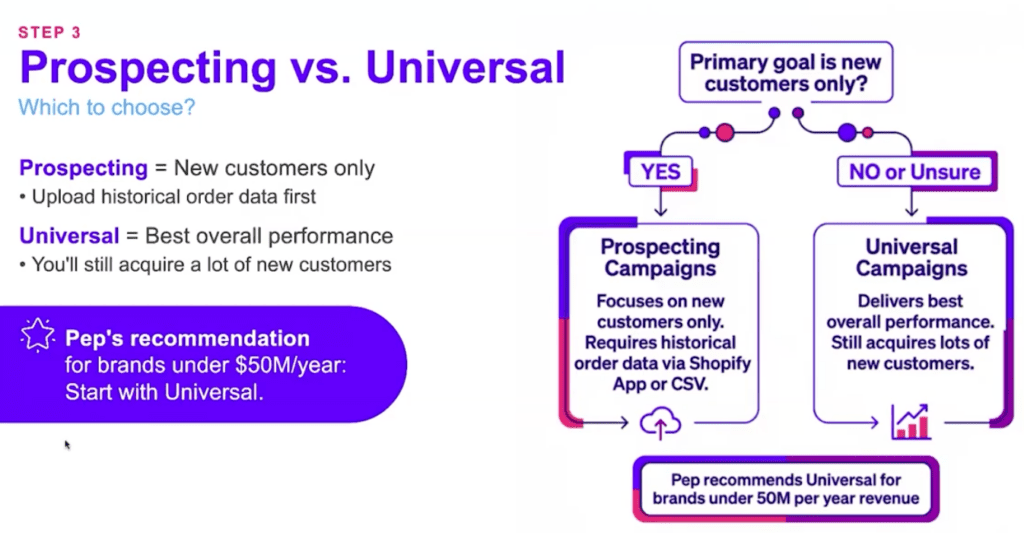
Another setting that matters is whether you want the campaign focused more broadly or more explicitly on new customer acquisition. In many cases, starting with a broader setup can actually help the platform learn faster, especially when the account is new and the system needs room to find patterns. A lot of advertisers assume that going more restrictive will lead to cleaner new customer performance. Sometimes it does. Sometimes it just slows the learning process.
That is why the smartest move early on is often to give the system enough room to breathe, then narrow based on what the data tells you.
Day Zero vs Day Seven
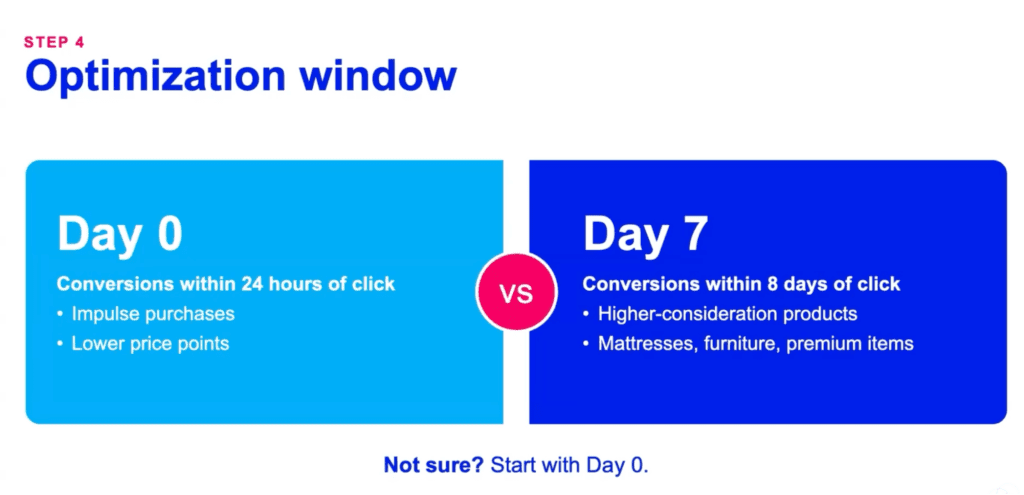
The optimization window is another place where people can overcomplicate what should be a simple first decision. If your product is relatively low consideration and customers tend to convert quickly, a day-zero window is often the cleaner starting point. If your product has a longer buying cycle, higher AOV, or more consideration before purchase, a longer window may make more sense.
The key is understanding what that does to your patience level. A longer optimization window means slower data maturity. You cannot launch something, look at it too early, and assume the platform is not working. That is not a platform problem. That is a timing problem.
Start With What Already Works
The easiest mistake to make when testing a new channel is trying to invent everything from scratch. You do not need a brand-new creative strategy, brand-new landing pages, and a total reset on day one. Start with the offers and assets that have already proven themselves elsewhere.
If you have product pages, advertorials, or homepage flows that work well on Meta, those are strong starting points. If you have videos that already perform, start there too. That does not mean Axon will always pick the same winner Meta does. It just means you should let proven assets get the first shot.
One of the smartest launch strategies is to take your strongest potential front-end offers, organize them cleanly, and let the platform show you what it wants to scale. You are not trying to prove a theory. You are trying to find traction.
Creative Matters, But Not in the Way Most People Think
Yes, Axon needs creative. Yes, video is central. And yes, creative volume matters.
But the deeper point is that Axon rewards clarity more than novelty. If your ads communicate transformation clearly, if your offer is obvious, and if the customer understands why they should care, you are giving the platform a real chance to work.
A lot of brands get stuck because they think they need dozens of perfect videos before they can test. That is usually fear disguised as strategy. You need enough creative to give the platform options. You do not need a Hollywood production schedule to get started. What you do need is a process.
That might mean repurposing your best Meta videos. It might mean using UGC more intentionally. It might mean building stronger static and interactive assets that extend the message instead of just decorating it. The platform can work. But it still needs inputs.
The Best Use Case for Axon
The brands that tend to see the most upside from Axon are not the ones looking for a miracle. They are the ones who already understand paid traffic fundamentals and want another place to apply them. They have an offer that converts. They know their numbers. They have enough creative to test. And they are ready to diversify without abandoning what already works.
That is why Axon feels so promising. It is not “easy money.” It is a legitimate second engine for brands that are ready for one.
What to Expect Early On
Like any platform, Axon is not going to work for every brand the same way or at the same speed. Some brands will get proof of concept fast. Some will need more creative. Some will need a better landing page. Some will discover that a product that wins on Meta is not the one that wins on Axon.
That is normal. The point of the first campaign is not perfection. The point is signal. You are trying to learn:
- Which offer works here
- Which creatives get traction
- Which settings help the platform find your buyers
- And whether this deserves more budget
That is a much healthier mindset than expecting a new channel to instantly perform like your most mature Meta campaign.
The Real Opportunity
For years, advertisers have wanted another platform that could sit beside Meta without feeling like a compromise. That is why Axon matters. It gives ecommerce brands a real shot at traffic diversification with a setup that is simpler than expected, an attention environment that is stronger than most people realize, and enough scale to matter if it works.
Not because it is better than Meta. Because it is different from Meta in ways that can help your business become less dependent on a single source of growth. And in 2026, that is more than a media buying win.
That is a business advantage.
Catch the full breakdown in the latest Smart Marketer Show episode here.


