
The clicks aren’t coming back. Here’s what to do instead.
Let’s be real: if your blog traffic has taken a hit in the last year, you’re not imagining it. You’re not shadowbanned. Your content didn’t suddenly get worse.
The game just changed.
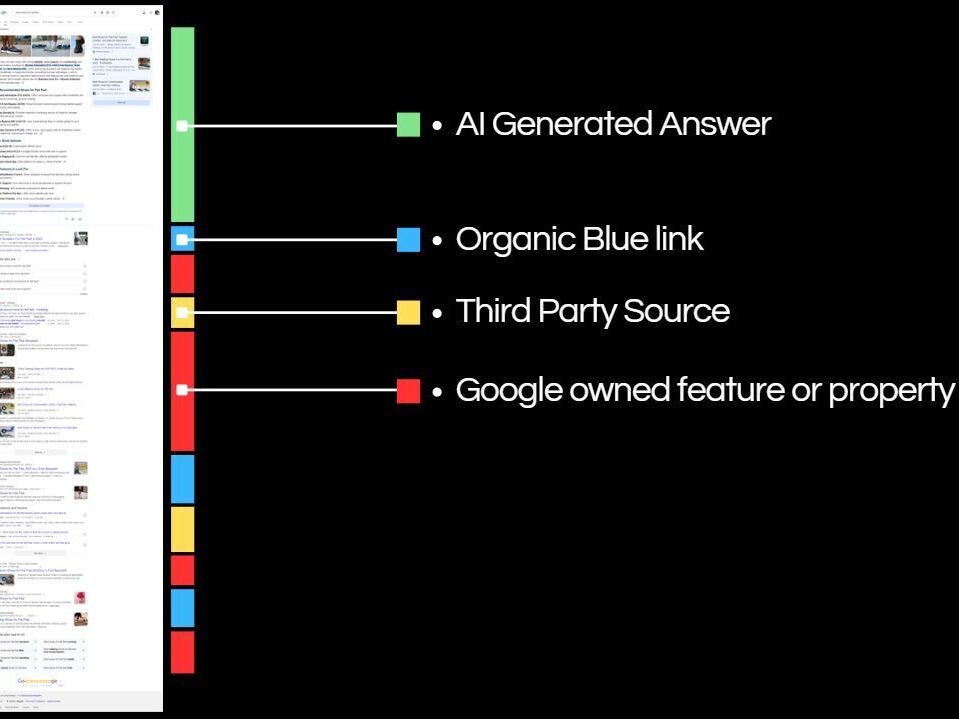
More than 56% of searches now end without a single click to any website. Users are getting their answers directly from AI-powered results pages like Google’s AI Overviews, Perplexity, ChatGPT, and more. They never need to visit your blog to get what they came for.
This isn’t a traffic slump. It’s a structural shift. And the brands that are going to win in this new era aren’t the ones publishing the most blog posts, they’re the ones that AI systems have learned to trust and recommend.
Here’s what it means, why it matters, and what you can do about it right now.
What’s Actually Happening to Your Traffic
If you’re running a content-heavy site, you’ve probably felt this. The posts that used to drive steady organic traffic are now getting half the clicks, sometimes less. And the ones ranking for informational queries? Those got hit hardest and earliest.
Here’s why: platforms like Google, Perplexity, and ChatGPT have gotten very good at extracting the answer out of your content and presenting it directly on the results page. Users search. They get what they need. They move on, without ever landing on your site.
And it’s not stopping at informational content. Commercial intent, “best email platform for e-commerce” or “top Shopify apps for retention, “ are both heading in the same direction. AI shopping assistants are already being built to evaluate product data, reviews, and pricing before presenting a “best option” directly to the buyer. Category pages and listicle blogs are going to feel this next.
Bottom line: the traditional model of “publish content ? rank ? get traffic” is no longer sufficient on its own. The metric that matters now is citations.
From SEO to AEO: What’s the Difference?
Traditional SEO was about ranking. You picked keywords, built content around them, earned backlinks, and climbed the SERP. The goal was a blue link at the top of the page that people would click.
Answer Engine Optimization (AEO) is about something different: becoming the recommended answer. Instead of optimizing to rank for a keyword, you’re optimizing to be recognized as the most credible, trusted, and authoritative source on a topic so that when an AI system assembles an answer, it’s your brand it cites.
Think of it this way: SEO puts you in the search results. AEO puts you in the answer.
And while some people call this GEO (Generative Engine Optimization), we prefer AEO for a reason: the goal isn’t just to feed a language model. It’s to achieve the kind of understanding, authority, and trust that makes AI systems treat your brand as the definitive answer to a specific question.
The 3 Pillars of AEO
There’s a clear framework for building the kind of brand presence that AI systems learn to recommend. It breaks down into three pillars:
1. Indexability: Can AI Actually Read Your Brand?
Before any of the strategy stuff matters, your website needs to be technically accessible to AI crawlers. This is non-negotiable.
AI bots like GPTBot and PerplexityBot work differently than traditional search crawlers. They need your data served in clean, raw HTML, not buried in JavaScript-rendered content they can’t parse. That means:
- Server-side rendering (SSR) for key pages
- JSON-LD Schema markup implemented correctly (Product, FAQ, LocalBusiness, etc.)
- An interconnected content knowledge graph using the @id property consistently to create a unique digital fingerprint for your brand entities.
If AI can’t read you clearly, nothing else in this framework will work. Indexability is the foundation.
2. Brand Representation: Are You Showing Up Everywhere That Matters?
Once you’re readable, you need to be visible consistently, across the platforms AI systems actually scan to build their understanding of who’s credible in a given space.
This is what’s called Brand Density: how frequently and consistently your brand appears across the digital ecosystem in relevant contexts. The modern web’s architecture is built around semantic networks and knowledge graphs, not just keyword indexes. And AI systems are constantly scanning this ecosystem to triangulate which brands are the real players in a given category.
That means your brand needs to be present and recognizable across:
- Industry directories and niche listing sites
- News outlets and trade publications (even small mentions count)
- Social platforms where your audience is active
- YouTube, podcasts, and other multimedia channels
The more places AI finds your brand mentioned in the right context, the more it trusts you as a credible entity in that space.
3. Authority: The Biggest Needle-Mover
This is where most brands are leaving the most on the table, and where the biggest opportunity lives.
In the old SEO world, authority meant backlinks. More links from more sites = higher PageRank = better rankings. That’s not how AI systems assess credibility.
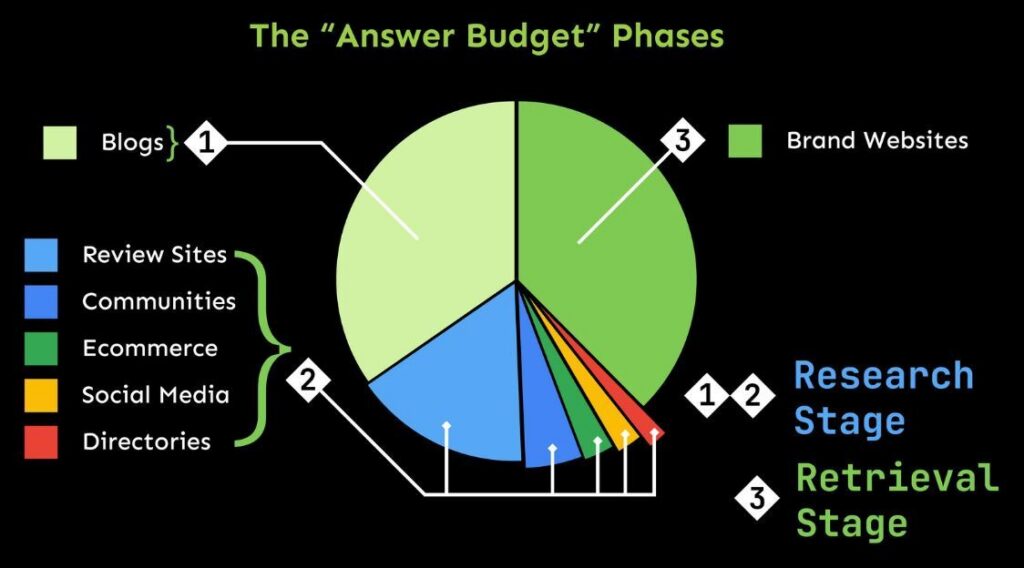
AI systems are looking for third-party validation: What are real people saying about you in spaces they trust? This is sometimes called semantic authority, and it’s measured through things like:
- Unlinked brand mentions on high-trust platforms (Reddit threads, LinkedIn posts, Quora answers, YouTube comments)
- Reviews on Yelp, Google, G2, Trustpilot, or industry-specific review sites
- Discussions in communities where your target audience actually hangs out
- Thought leadership content on LinkedIn Pulse or industry blogs
Here’s the key insight: AI systems run a two-stage process when deciding who to recommend. First, they scan third-party platforms to build a shortlist of credible entities based on consensus. Then they dive into your website to extract specific facts and confirm the details. If you don’t exist in the first stage, you never make it to the second.
What AEO Looks Like in Practice
AEO isn’t one thing you turn on. It’s a compounding strategy that runs across your website, your content, and your off-site presence simultaneously. Here’s a practical breakdown:
On Your Website
- Audit your technical setup: Are your pages crawlable by AI bots? Is structured data focused on entity relationships and content knowledge graphs?
- Restructure content to be answer-first: question headers, direct answer paragraphs, clear entity-rich language
- Use same as links to connect your brand to global knowledge graphs (Social profiles, industry directories, Wikidata, Google Knowledge Graph, etc.)
Off Your Website
- Claim and optimize all relevant directory profiles
- Get active on Reddit, LinkedIn, YouTube, and review platforms. Not just broadcasting, but participating in real conversations
- Run a targeted digital PR campaign to earn mentions in industry publications
- Build your review volume on platforms AI systems weigh heavily
In Your Content
Stop writing for search volume. Start writing for specific intent.
AI retrieval systems don’t care about keyword density. They care about whether your content clearly and directly answers a specific question. That means shorter, denser, more structured content that leads with the answer and backs it up with specifics.
Why Early Movers Win
AEO is, in many ways, a winner-takes-all system. AI recommendations tend to converge on the same trusted sources, which means the brands that establish credibility first are going to be very hard to displace.
The businesses that are building their Content Knowledge Graphs now, structuring their data, growing their brand density, and earning third-party validation, are locking in their position as the default recommendation before the ecosystem fully solidifies.
Meanwhile, the brands sitting on the sidelines waiting for their blog traffic to come back are falling further behind every month.
The Takeaway
Blog traffic isn’t coming back to where it was. That’s not a disaster though, it’s a signal. The rules are changing, and the brands that adapt will have a massive advantage over the ones still chasing the old metrics.
Answer Engine Optimization gives you a clear framework for what to build instead: a machine-readable identity, consistent brand presence across the web, and the kind of third-party authority that makes AI systems trust and recommend you.
It’s not a quick fix. But it’s the right long game to start today.


