
If you don’t have a merchandising calendar, you don’t have a revenue plan. You have campaigns. You have emails. You even have ideas.
But you don’t have architecture… And architecture is what turns a “good month” into a predictable year.
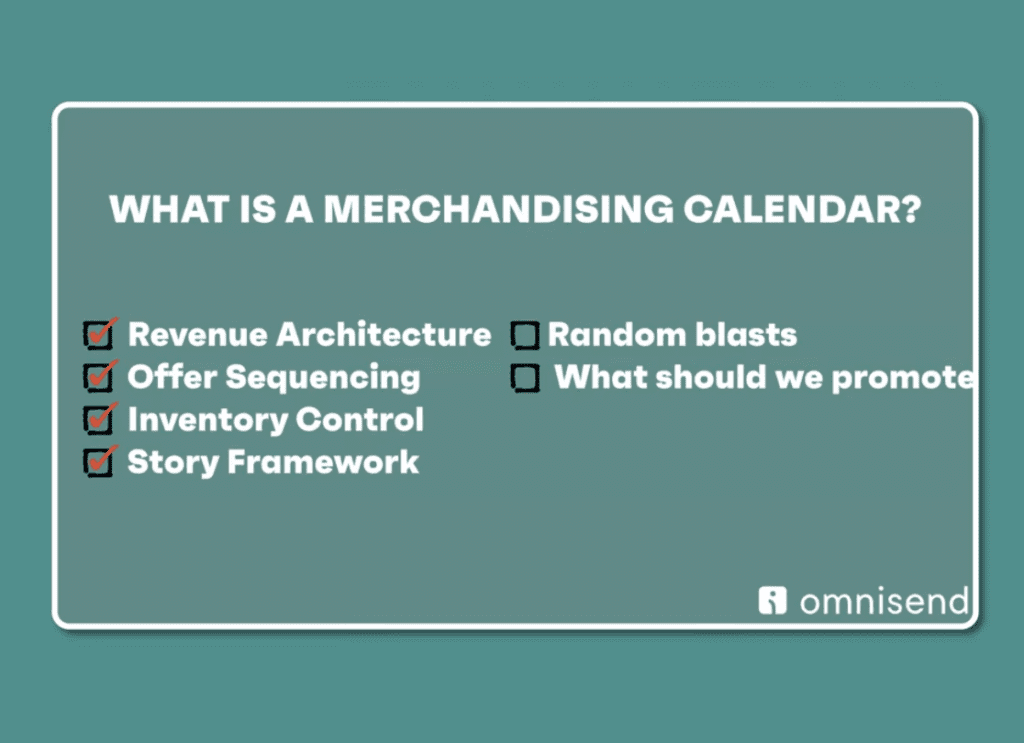
In a recent training with Omnisend, Ezra walked through exactly how high-growth ecommerce brands structure their year to drive more revenue, increase asset value, and build a business that’s worth selling one day.
Because that’s the real game. Not just cash flow. Asset value.
Let’s break it down.
First: Understand What You’re Actually Building
An ecommerce brand is more than a store. It’s an asset, and assets are valued based on profit.
A $10M ecommerce brand with 15% profit margins is generating $1.5M in profit. That business might sell for 3–5x that number. Which means your “income” isn’t just what you pull out each year. The real wealth event happens when you sell.
That changes how you should think.
You’re not just trying to make more sales this month. You’re trying to build a more valuable company.
And one of the fastest ways to increase profit without increasing acquisition costs?
Improve lifecycle marketing. Email. SMS. Retention.
That’s where the merchandising calendar comes in.
Email and SMS Aren’t “Channels.” They’re Multipliers.
Email has the highest conversion rate of any channel in ecommerce. SMS often converts even higher.
If your email and SMS aren’t driving 30–40% of total revenue, there’s opportunity on the table.
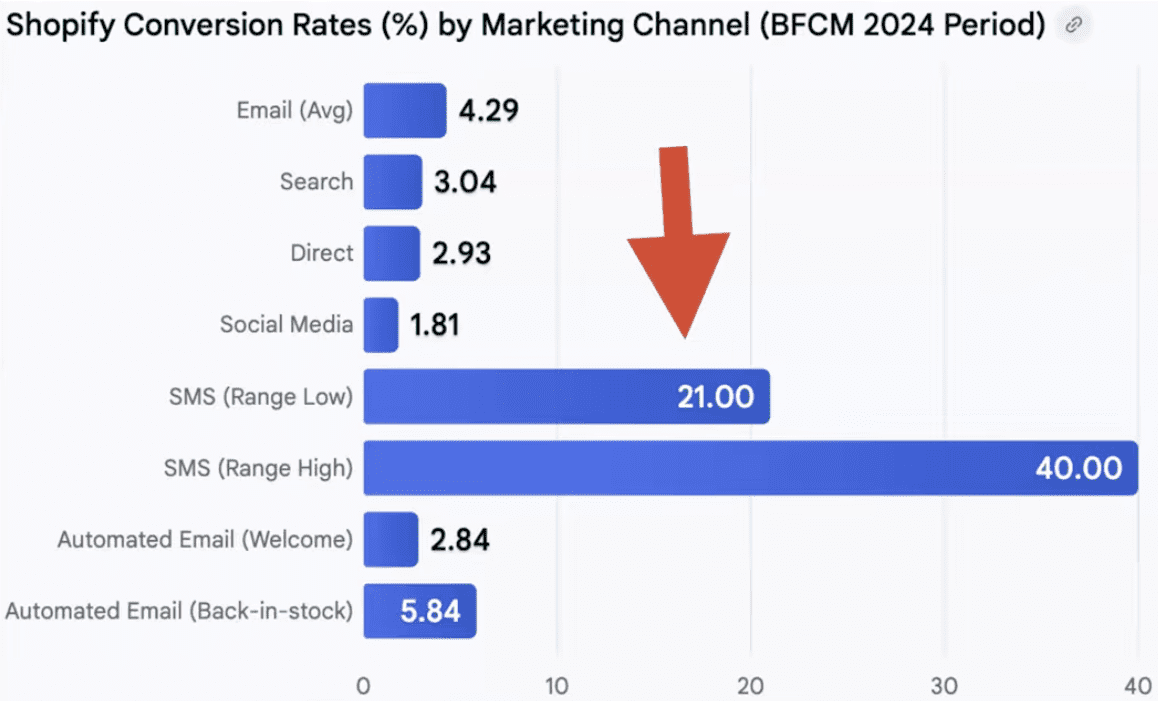
But blasting promotions randomly won’t get you there alone. What works is structured promotion layered with value-driven content.
You warm people up. You run the promotion. You recover and re-engage. Over and over.
That’s the calendar.
The Structure of a High-Performing Merchandising Calendar
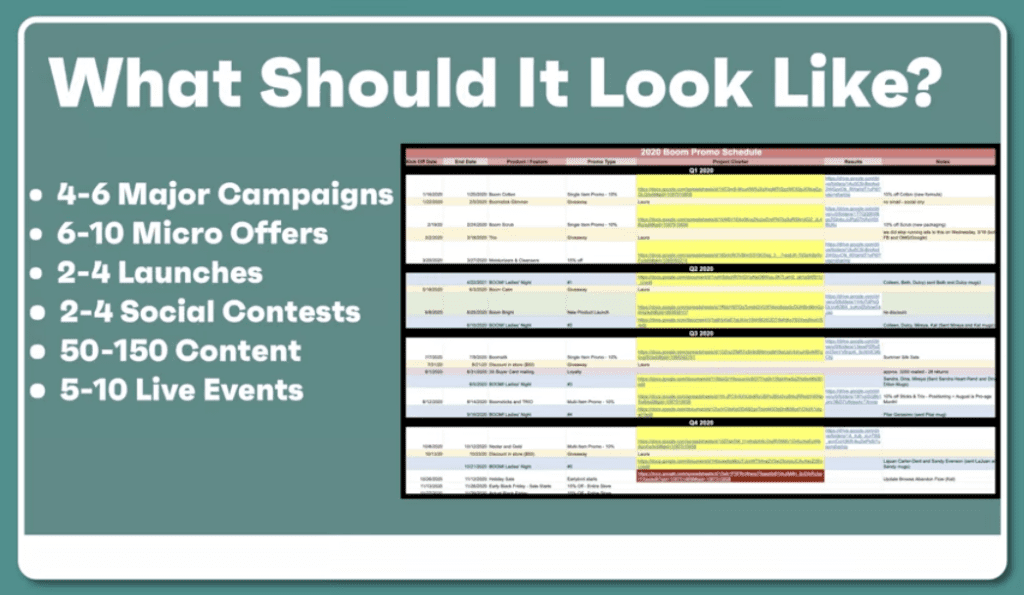
Most brands under-promote. They run one big sale. Maybe two. Then they wonder why revenue feels inconsistent. A strong merchandising calendar typically includes:
- Four to six major campaigns per year. (These are your large, multi-day sales events with real merchandising strategy behind them.)
- Six to ten micro-offers. (Short, one- to three-day offers with urgency and creative bundling.)
- Two to four product launches. (Growth requires newness. Without launches, most brands plateau.)
- Quarterly giveaways or social contests. (These build audience and engagement, not just revenue.)
- Fifty or more pieces of content annually. (Not sales emails. Actual value-driven content.)
- Five to ten live events. (Live shopping, demos, influencer streams. Attention wins in today’s market.)
The point is not to “discount constantly.”
The point is to create rhythm.
Big Campaigns vs. Micro Offers
Major campaigns are your revenue spikes. Think Black Friday, Memorial Day, Valentine’s Day, Back to School. These usually run three to nine days.
They should include:
- Heavy email frequency
- Strategic SMS
- Paid ad support
- Bundles
- Threshold discounts
- Free gift with purchase
- Clear start and end dates
You warm the audience up before the event. You push hard during. Then you transition back to content and engagement.
Micro offers are different.
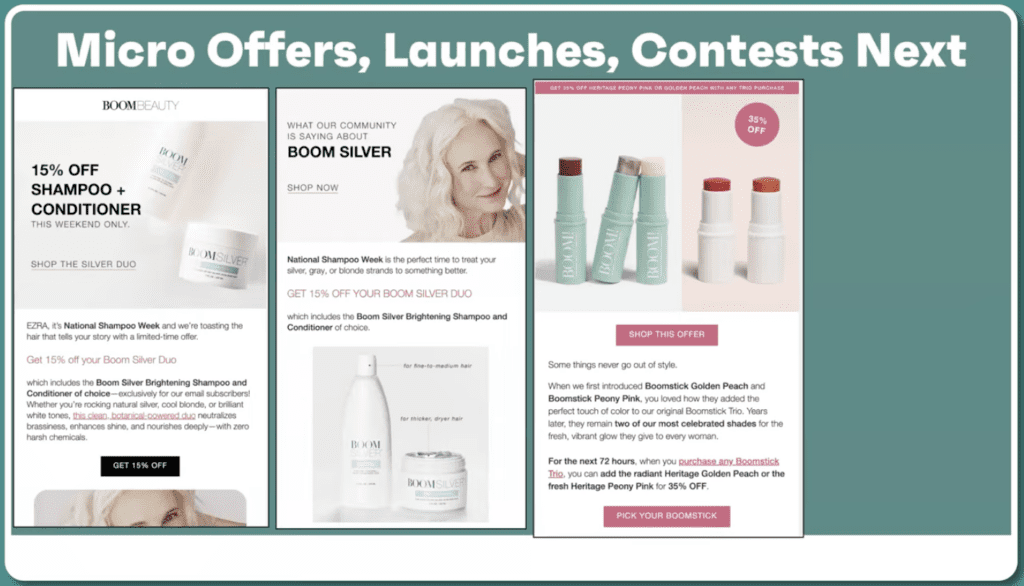
They’re shorter. More targeted. Often built around a specific product or bundle. They don’t require heavy paid advertising. They’re designed to keep revenue steady between the big events.
For example:
- A two-day bundle discount tied to a relevant theme.
- A one-day free gift with purchase.
- A short relaunch of a restocked product.
The brands that grow fastest aren’t guessing what to promote each month. They already know.
Content Is What Makes Promotion Work
Here’s where most brands miss it, if all you send is “Buy now,” your list burns out.
If you send value consistently, promotions perform better. Content builds trust. It reinforces brand identity. It keeps attention.
That content can look like:
- Educational articles
- Customer case studies
- Myth-busting posts
- Behind-the-scenes transparency
- Founder insights
- User-generated content
- Curated industry content
- Listicles tied to your products
Every piece of content either builds trust, builds interest, or builds identity. When you layer promotions into that ecosystem, they convert more effectively.
Merchandising Strategy Matters More Than Discount Size
Not all discounts are created equal. A flat 15% off storewide is easy, but bundling products and stacking offers often performs better.
- Buy one, get one.
- Free gift with purchase.
- Threshold discounts like “Spend $100, get 20%.”
- Limited-time bundles.
- Basket builders with high-margin accessories.
Yes, a goal is bumping revenue, but it’s also increasing average order value overall.
Bundles, in particular, are one of the most effective ways to increase basket profit without increasing traffic.
“Won’t I Overwhelm My List?”
This came up in the Q&A section.
The average adult receives hundreds of emails per day. Most of what you send isn’t even seen.
If you’re sending relevant, well-structured content and promotions, increasing frequency usually increases revenue more than it increases unsubscribes.
The key is balance. Promote more than you think you should. But earn the right to promote through consistent value.
Even High-End Brands Need Structure
There’s a myth that premium brands shouldn’t discount. The reality is this: structured, limited promotions do not damage brand value, constantly sloppy discounting does.
Four to six well-designed campaigns per year will not erode your positioning. They will improve cash flow and asset value.
And that’s the game.
The Point Isn’t “Do Everything at Once”
You don’t need to implement the entire framework overnight.
Start small. Plan your next major campaign properly. Add one micro-offer per month. Commit to consistent weekly content. Then build.
The brands that grow fastest aren’t improvising. They’re operating on a calendar. And when you have a calendar, you don’t just hope for revenue to come in. You engineer it.
If you don’t currently have a merchandising calendar, that’s not a problem. It just means your next lever for growth is obvious.
Build the structure.
Layer in content.
Merchandise strategically.
Promote confidently.
And turn your brand into a real asset.


