
Most of what gets written about entrepreneurship is about scale. Traffic, conversion rates, revenue. The stuff you can put in a chart.
This isn’t that blog.
A recent episode of the Smart Marketer Podcast brought on a guest who doesn’t usually show up in conversations about digital marketing: Casey, Molly’s husband, who runs Morley’s Backyard, a bar and restaurant in Danville, Kentucky. Together they manage a dog rescue, a farm, a blended family, and multiple businesses that couldn’t be more different from each other. One works entirely on the internet. The other works entirely in-person.
What came out of that conversation was one of the most honest takes we’ve had on what it actually looks like to build something with someone you love, and what running a local business has to teach anyone who’s only ever built things online.
Key Takeaways
- Running a local business and running an online business require completely different muscles. The feedback is different, the community is different, the time cost is different.
- When both partners are entrepreneurs, protecting your personal life takes active effort. Date nights, boundaries around phones, and intentional time together don’t happen on their own.
- The best local businesses are built on knowing your market from the inside. Not demographics. Actual people you grew up with.
- Leaving work at work is harder when your work lives on an app on your phone. The restaurant has Toast. Smart Marketer has Slack. Both will pull you in at 10pm if you let them.
- If you’re only building online, find something you do with your hands. The in-person fulfillment is not optional.
How Did a Tire Shop Become One of Central Kentucky’s Best Bars?
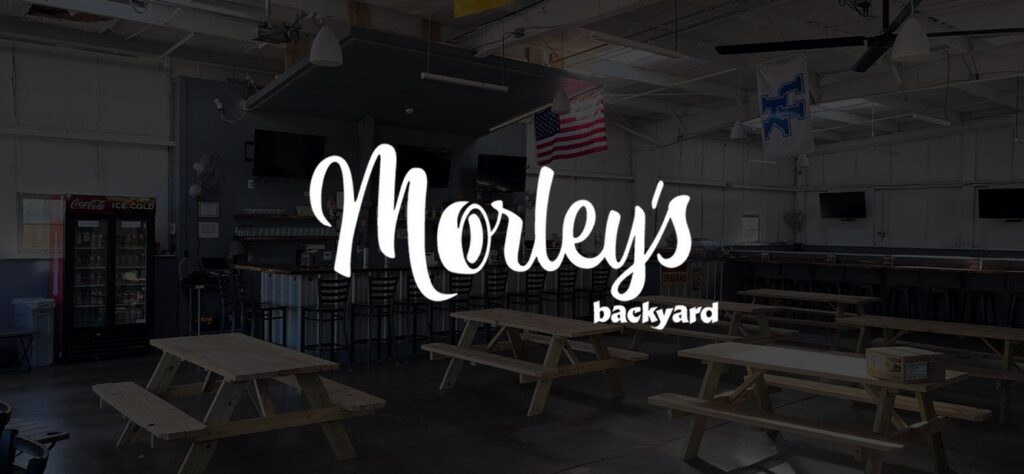
Morley’s Backyard started as a tire center. Casey used to take his truck there in high school. When the owner finally retired and put the building up for sale, a couple of friends who’d moved back to Danville from Austin saw what the big backyard could become: picnic tables, a music stage, cornhole boards, the kind of outdoor bar culture that’s everywhere in Texas and almost nowhere in rural Kentucky.
They opened the bar. But they didn’t have food, which is a rough way to run a bar. Casey and two friends had been running a food truck as a side project, nothing fancy, just guys who loved good meat setting up a Blackstone at a friend’s farm and flipping burgers. They started parking the truck at Morley’s. No social media posts. No marketing. Just good food showing up in a place that needed it.
It worked. And when Casey saw what it could become, he made the leap from food truck to full kitchen, from side hustle to business partner. The tire shop became something Danville didn’t really have before: a family-friendly, dog-friendly, farm-to-table bar where you could bring your kids, let them run around the backyard, and drink a local bourbon while your neighbor told a story about your family member that they grew up with that you’d never heard before.
What Does Running a Local Business Actually Teach You?
If you’ve only ever built businesses online, there are things about local business that will genuinely surprise you.
Your customer is standing in front of you. Every day. That’s the part people romanticize, and it is genuinely great. You know exactly what’s working and what isn’t because you can see it in real time. A dish doesn’t land? You hear about it before the night is over. A new cocktail is a hit? You know by 8pm because three people ask for a second one.
But that proximity cuts both ways. When things are hard, you can’t just close the laptop and take a walk. The problem is in the room with you. And unlike an ad account where you can pause a campaign and breathe, a restaurant has staff waiting to be told what to do, tables waiting to be served, and a community watching closely because they know you.
| Local / Brick-and-Mortar | Online / Digital Business | |
|---|---|---|
| Your customer | Standing in front of you every day | A name in a dashboard, maybe a support ticket |
| Feedback loop | Instant — you see it on their face | Delayed — you read it in data, reviews, or emails |
| Community | Your regulars become friends, neighbors, advocates | Built intentionally over time through content and trust |
| Growth lever | Word of mouth, local reputation, in-person experience | Paid traffic, email, SEO, organic content |
| Time cost | You have to be physically present | Flexible, but the boundary between work and life gets blurry |
| What wakes you up at 3am | Staff, inventory, a bad Yelp review | Algorithm changes, ad spend, platform outages |
| What keeps you going | The look on someone’s face when they love the food | The ping of a sale, the email from a customer whose life changed |
Casey has been in the restaurant industry for 20 years. His goal with Morley’s was to finally run one that didn’t feel like a prison sentence. Most of his career was leaving the house at 6am and getting home at midnight. What he’s built at Morley’s is something different: a place where 80% of the time, he’s not really working. He’s cooking food he loves, making drinks he’d order himself, and hanging out with people he’d choose to spend time with anyway. The other 20% is still hard. That’s the restaurant industry. But the baseline is different.
How Did They Know Morley’s Had Real Potential?
The first time Molly and Casey sat on the Morley’s patio, there was beer cheese and rotisserie hot dogs on the menu. That was it. Casey turned to Molly and said this could be so much more.
What they saw wasn’t just a cool space. They were reading the market from the inside. Both of them grew up in Danville. They knew what was missing. Alcohol had only been sold in bars in that county for about ten years, so the whole bar and restaurant scene was still relatively new. There wasn’t a family-friendly spot where you could bring kids and dogs. There was no farm-to-table option built around local Kentucky meat. There was no outdoor gathering place with the vibe of an Austin backyard bar.
Those were the green flags. Not a market research report. Just two people who knew the community well enough to see the gap.
The meat alone became a differentiator. Through a friend’s multi-generational farm, Morley’s sources beef, pork, and other proteins from local Kentucky farmers. Kentucky Proud certified. One cow, not a blend of multiple animals from a distribution center. Casey tells people: I could show you a picture of the cow you’re about to eat. He doesn’t, but he could. And in a world where farm-to-table has become a marketing phrase slapped on menus that source from the same Sysco truck as everyone else, that kind of specificity is actually rare.
What Happens When Both People in a Relationship Are Building Something?
The honest answer is: it’s great and it’s hard, sometimes in the same week.
The thing that’s made it work is that they’re not building the same thing. Molly runs Smart Marketer, which is an online business. Casey runs Morley’s, which is in-person, hands-on, and physically present. They don’t work together day-to-day. They don’t report to each other. They don’t have to agree on strategy or creative direction or how to structure a campaign.
What they do have to agree on is how to protect their time together. That’s the part that takes real effort.
Smart Marketer is at a point now where the business is mature enough that 12-hour days are rare. Morley’s is a few years in and still in full grind mode. That mismatch creates a real tension. One person has more space. The other is still building. The rhythms don’t always sync up. Some weeks the only real time they get is a car ride or a coffee date or a phone call between things.
The rules they’ve landed on are simple but not easy. Leave work at work. Don’t bring the stress of your business home to someone who just carried the stress of theirs all day. Be intentional about trips and date nights because if you don’t put them on the calendar, they don’t happen. And when you’re home, be home. Casey started putting his phone in the other room when he gets back at night. Not because he doesn’t care what’s happening at Morley’s, but because it will still be there in the morning, and the person in front of him won’t always be.
Why Every Online Business Owner Needs Something They Do With Their Hands
This one came up almost as a side note in the conversation, but it might be the most useful thing in the whole episode.
Casey can’t really describe what it would look like to work online. He jokes that he barely knows how to turn on a computer. What he’s good at is being present, building relationships face to face, working with his hands, cooking food that makes people feel something. That’s where he’s alive.
And watching him work has taught Molly something she now talks about with people who work entirely online: if you don’t have something in your life that you do with your hands, that keeps you physically in the real world, it gets hollow. Not immediately. But eventually.
Ben Bennett, Smart Marketer’s creative director, does woodworking at night after spending the day working on the computer. The dog rescue sometimes means early mornings for Molly in a barn with animals that need care. Sometimes she’s coming into Morley’s occasionally to help out. These aren’t hobbies tacked onto the side of real work. They’re the part that keeps the real work meaningful.
If you’re building something online and it’s starting to feel a little empty even when the numbers are good, this might be why.
What Has Building Morley’s Taught Them About Business Overall?
A few things that apply whether you’re running a restaurant or an ad account.
Know your market from the inside. The best move Morley’s made wasn’t a marketing campaign. It was two people who grew up in the community seeing what was missing and filling it. You can do research, run surveys, look at competitor data. But there’s no substitute for genuinely being the avatar.
Build the community before you need it. Morley’s core regulars are people Casey could text right now and have 50 of them show up on a night the restaurant is technically closed. That kind of loyalty doesn’t come from Instagram ads. It comes from years of treating people like neighbors, sponsoring the local school, hiring people you actually like, and building something that feels like it belongs to the town.
Grow slow enough to stay good. Several food businesses in Danville closed this year. Morley’s keeps growing. Part of that is the product. Part of it is that Casey is deliberate about not scaling past what they can do well. They’ve already outgrown the kitchen and are talking about expanding. But the goal isn’t to be the biggest. It’s to be the one people keep coming back to.
Rather than just closing Sunday through Tuesday, the slow nights in small towns for restaurants, Morley’s opens the bar and invites local food trucks in. The food trucks get a venue and the chance to build their own audience. Morley’s gets foot traffic and variety. The customers get something different every week. It’s the kind of move that only makes sense if you think of your business as part of a community, not just a revenue generator.
What Does the Dog Rescue Have to Do With Any of This?
Fields of Freedom, the nonprofit dog rescue Molly and Casey run on their farm, started as Molly’s passion project and became one of the things that holds everything else together.
Morley’s is where many of the dogs get adopted, some being brought to hang out at the bar, one even just found his forever home 6 hours after leaving the shelter because he came to eat with us. Their photos get put on the wall at times until someone falls in love and takes one home. The people who come in for a burger end up asking about the beagle in the picture.
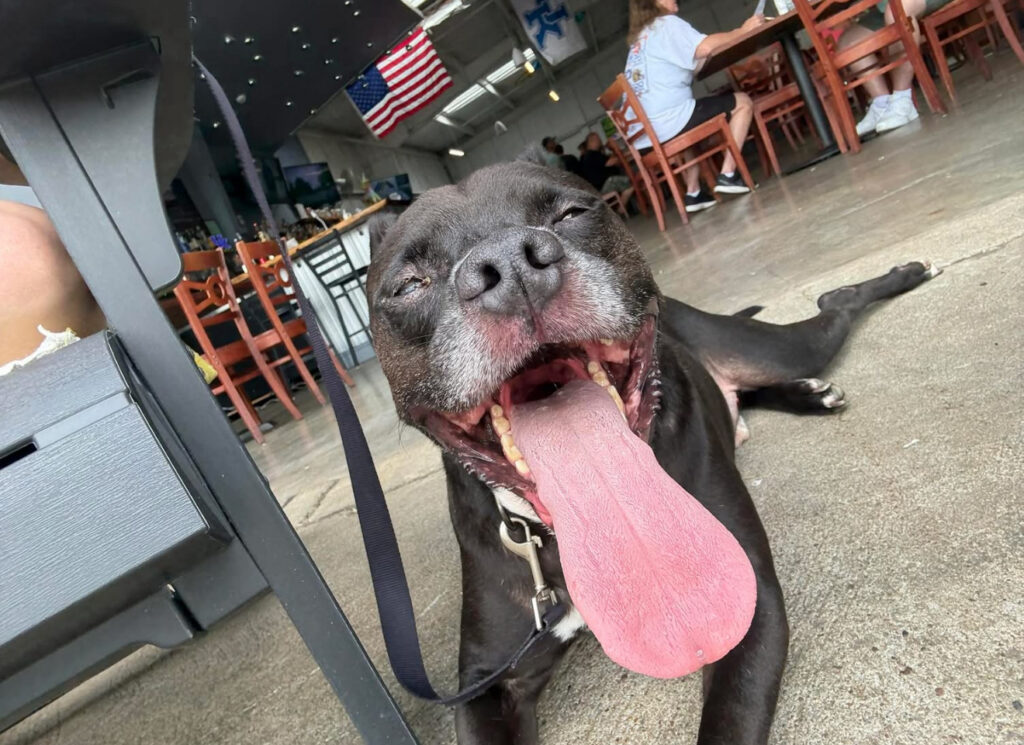
It wasn’t designed that way. It just grew that way, because when you build things in a real community with real people who care about the same things, they connect and intertwine.
That’s probably the most honest summary of what Morley’s, Fields of Freedom, and Smart Marketer have in common. They’re all built by people who actually give a damn about the people they’re serving. Online or in person, that’s still the thing that works.
Want to Hear the Full Conversation?
The full episode is on the Smart Marketer Podcast. You can find it at smartmarketer.com/podcast. And if you’re ever in central Kentucky, Morley’s Backyard is on Google Maps and Apple Maps. The reviews will tell you what to order, but the regulars will tell you the real stories (and this regular will recommend the Farmer’s Cheeseburger with an Ale-8).


