


Some of Smart Marketer’s most memorable ads started with one question:
What would be fun to make?
That question has led to movie-inspired commercials, live sketches, rented locations, a DeLorean, team cameos, and more than 20 million views across the campaign library discussed in this episode.
The finished spots look cinematic, but the process behind them is more accessible than it may seem. Anthony Farrat, Smart Marketer’s creative producer, joined Molly Pittman to explain how a small team turns a playful idea into an ad that entertains people and supports a measurable business goal.
You do not need a massive crew to begin. You need an idea your team wants to make, a clear understanding of the audience, and the patience to work backward from what you want people to see on screen.
Why these commercials stay with people
Most direct-response ads have a short assignment. They introduce an offer, make a case, and ask for an action. That focus is useful, but it can also make the creative easier to forget once the promotion ends.
Smart Marketer’s movie-inspired commercials do a different job. They borrow a familiar world, then fill it with jokes and details that make sense to ecommerce operators and marketers. Someone may recognize the Goodfellas reference immediately, but the retargeting jokes tell that person the commercial was made for people who understand the work.
That specificity creates a sense of belonging. Viewers are not watching a brand imitate a movie for its own sake. They are seeing their own language, frustrations, and inside jokes turned into entertainment.
The team also enjoys making the work. That energy shows up in the performances, the writing, and the small details. The audience can usually tell when a creative team is interested in its own idea.
Start with “Wouldn’t it be fun if?”
The earliest Smart Marketer commercials grew out of the team’s shared love of movies, comedy, and production. The creative process begins with curiosity instead of a rigid list of ad requirements.
What if Smart Marketer made a Forrest Gump-inspired commercial? What would a Back to the Future version of paid advertising look like? Could a Goodfellas-style scene teach marketers something useful while making them laugh?
The business objective enters early enough to shape the script. The concept still has to connect to a product, offer, or next step. Anthony and Molly describe the result as a “chocolate-covered carrot.” Entertainment earns attention, while the useful marketing idea gives the piece substance.
For an ecommerce team, this creates a simple creative filter. The concept should be enjoyable before the logo or call to action appears. It should also give the right customer a natural reason to care about what comes next.
Ask two questions before committing to an idea:
- Would our audience choose to watch this if it appeared in the feed without a sales message?
- Can the story lead naturally to a problem we solve or an action we want people to take?
If the answer to either question is weak, the idea needs another pass.
Reverse engineer what appears on screen
Anthony calls his production framework “reverse engineering Hollywood.” Start with the scene you want, then work backward until every visible detail becomes a practical production question.
For a Back to the Future-inspired spot, the team needed a DeLorean. For its Goodfellas-inspired commercial, the team needed a bar, extras, wardrobe, lighting, and a way to rehearse a continuous moving shot.
The same process works at a smaller scale. Take a reference frame or sketch the scene, then inspect it piece by piece:
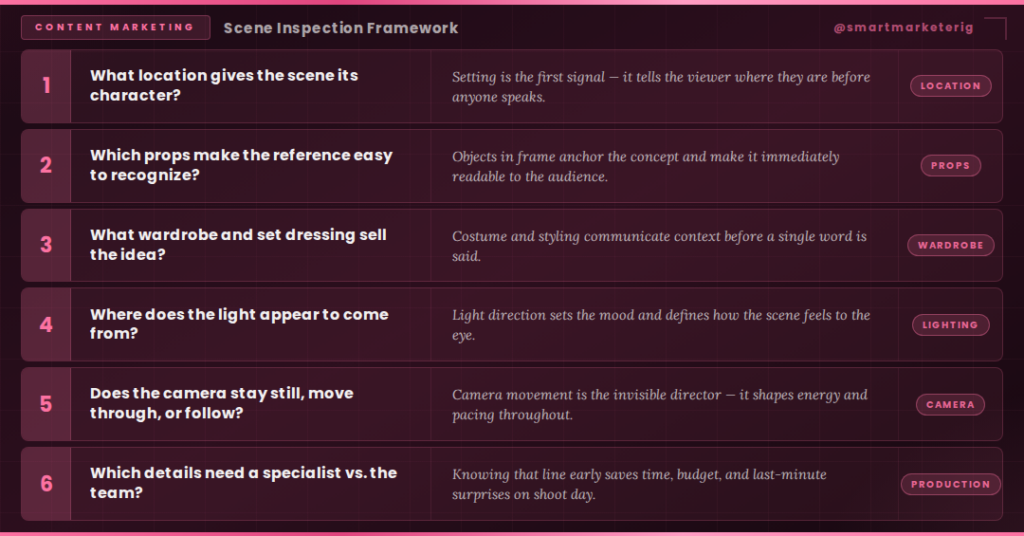
This turns “make it look cinematic” into a list of decisions. It also makes tradeoffs visible. If the location provides most of the atmosphere, you may need less set dressing. If one prop carries the entire reference, that prop deserves more attention than a larger equipment package.
Treat production like a potluck
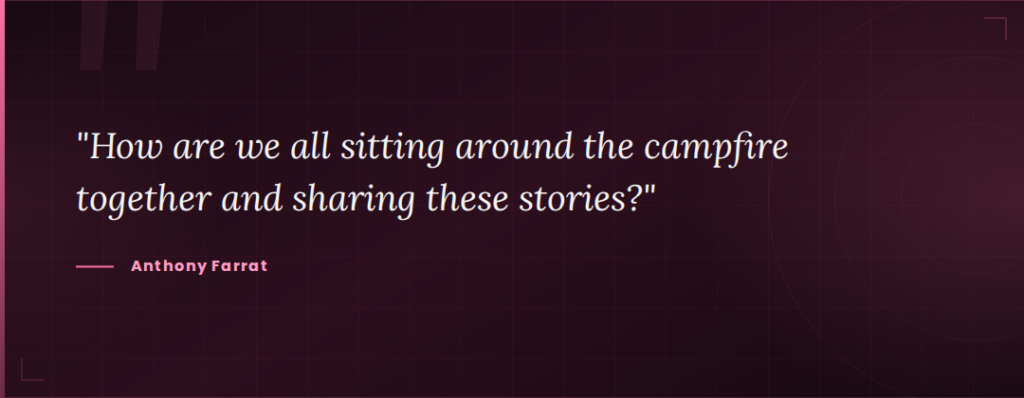
Anthony gets much of the credit for assembling and filming the commercials (and it is well-deserved), but he describes the work as a potluck. Different people bring the part they can contribute best.
Writers shape the script. A team member may know the right location. Friends, family members, and industry peers can appear on camera. Someone else may find wardrobe, arrange hair and makeup, or help manage the set. Anthony brings the technical plan together and captures the performance.
The Goodfellas-inspired shoot is a useful example. A team relationship helped secure a bar during hours when it was closed. Ezra brought people into the scene. The production added hair and makeup. Anthony rigged lights and wore a body-mounted camera system to capture the long moving shot. Each take also served as a rehearsal until the timing worked.
Your first production does not need that many moving pieces. The lesson is to inventory the people and resources already around you before assuming you need to hire a full crew. A customer may own the right location. A team member may be comfortable on camera. A friend may have the car, prop, costume, or practical skill that unlocks the idea.
Relationships can solve production problems that money would otherwise have to solve.
Match the production level to the concept
A polished commercial may justify an experienced production team. A short sketch built around personality and timing may work beautifully on a phone.
Anthony’s advice is to choose the path most likely to create the result you want. That starts with knowing what the concept depends on.
If the idea needs controlled lighting, visual effects, precise camera movement, several performers, or clean sound across a large location, experienced help can save time and protect the final result. If the idea is one person, one joke, and one recognizable customer problem, more equipment may only slow the team down.
Our Adfather commercial looked cinematic, yet the team filmed it in Ezra Firestone’s garage with a small group and a carefully designed setup. Backlit plants, warm color, contrast, and deliberate framing made the space feel larger than the room itself.
Production value affects how an ad feels, but more polish is not automatically better. A highly produced spot can signal care and make the asset feel substantial. A phone-shot video can feel immediate, personal, and native to the feed. The right choice depends on the idea, the audience, and where the video will run.
Make the joke specific to your audience
A familiar reference can attract broad attention. The details make the commercial belong to a particular group.
Molly calls this the “but no one else would” test. The large concept should be easy to recognize, while the dialogue, characters, and jokes reward people who understand your market.
In the Goodfellas-inspired commercial, Molly appears with meatballs and delivers a line about ad budgets being big and juicy. Other characters are “retargeting Reginas” who repeat themselves because they are retargeting. The humor comes from combining the movie’s world with language media buyers recognize from their daily work.
An ecommerce brand can use the same approach without parodying a movie. Start with a situation many people understand, then add a detail only your customer would notice.
A supplement brand might build a joke around the ritual of packing daily servings for travel. A pet brand might focus on the strange negotiations owners have with a dog that refuses one treat and demands another. A specialty apparel brand might use the tiny fit or fabric details its best customers discuss constantly.
The goal is recognition. The right viewer should think, “They know exactly what this is like.”
Plan the asset before the shoot
A strong concept becomes more valuable when the team plans for distribution before anyone calls action.
We often records several calls to action because one commercial may support more than one product or offer over time. The team also plans versions for the placements where the video will run.
A practical shot plan may include:
- A 16:9 version for YouTube
- A square or 4:5 version for feed placements
- A 9:16 version for vertical video
- Several endings tied to different offers
- A clean ending that can be reused later
- Extra close-ups, reaction shots, and behind-the-scenes footage
Aspect ratios change what fits in the frame. A wide group scene may crop poorly in a vertical placement. Important action near the edge can disappear. Plan the safe area for every major format, and capture alternate framing when the composition will not translate cleanly.
The script should separate the durable idea from the temporary promotion. If the entertainment and teaching can stand on their own, the team can update the ending instead of rebuilding the entire ad for each campaign.
Build the post-production and archive system
The work continues after the shoot. Anthony’s process includes footage backups, camera reports, collaborative review in Frame.io, visual effects, color and exposure fixes, multiple revisions, and final exports for each placement.
Some commercials need more technical work. In a Wolf of Wall Street parody, Ezra performed two characters in the same scene. The team filmed each side separately, then stitched the performances together. Because the light changed during the day, post-production also had to balance exposure so the finished conversation felt like one moment.
The archive matters just as much as the edit. Anthony keeps original footage and approved versions organized so the team can retrieve an old take, reuse a shot, or build a callback into a later campaign. That turns one production into a growing creative library.
At minimum, save the source footage, project files, music and graphics, final masters, placement-specific exports, and clean versions without temporary calls to action. Use names that identify the concept, date, format, and version without opening every file.
Give the finished commercial a real marketing job
We distribute these commercials in two ways.
First, the team can use them to build familiarity. Video-view campaigns can put an entertaining asset in front of people who already know the brand. The commercial gives that audience another positive interaction and can continue working after the original promotion ends.
Second, the same asset can support direct response. A campaign can optimize for a lead, trial, sale, or another measurable action. Different endings let the team match the commercial to the offer without losing the creative idea that earned attention.
Measurement should reflect the assignment. For brand distribution, watch attention, repeat engagement, comments that show recognition, and the useful life of the asset. For direct response, track the conversion event, cost, conversion rate, and downstream customer quality. Do not force one campaign to prove every kind of value at once.
The best outcome is an asset people remember that also has a clear place in the marketing plan.
Start with the scale you can support
Your first version can be one location, one customer truth, and one afternoon with a phone.
Choose a reference or situation that your audience will instantly recognize. Write one joke or observation that only your customer would fully appreciate. Connect it to one business goal. Then list what must appear on screen and what you already have access to.
Keep the production small enough to finish. Capture a clean version and more than one ending if the idea may support future offers. Save the footage in a simple archive so the next project starts with more material and more experience than the last one.
We’ve built its commercial library over years. The useful first step is not to match the largest production. It is to make one entertaining, audience-specific piece your team is excited to finish, then give it a real job once it is ready.


