
There’s a big difference between using AI and actually becoming an AI-first company.
Most teams are already doing the first one. They’re asking ChatGPT for a subject line, a recipe, a brainstorm, maybe even a rough draft. That part is easy. The harder part is turning AI into something that consistently saves time, improves execution, and becomes part of how your company actually operates.
That’s the shift a lot of businesses are trying to make right now. And it’s where most of them get stuck. Because the challenge is not getting access to AI tools. The challenge is getting real adoption, building useful workflows, and helping your team move from curiosity to capability.
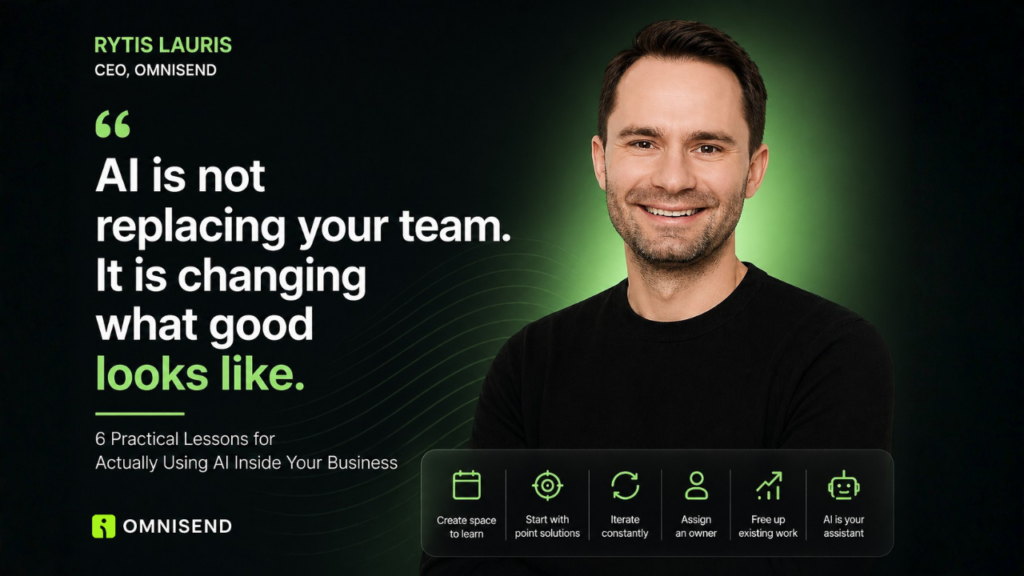
In a recent session, Omnisend CEO Rytis Lauris shared what that transformation has looked like inside a 200+ person company. Not from theory. From actually being in the trenches and trying to make AI work across real teams, real processes, and real day-to-day operations. What came out of that conversation were six lessons that apply to just about any business trying to use AI in a meaningful way.
1. AI does not adopt itself
One of the most useful reminders from the session was also the simplest: Just because your team has access to AI does not mean they will use it well. Giving everyone ChatGPT, Claude, Gemini, or Cursor sounds like progress. And to a degree, it is. But access alone does not create behavior change.
What often happens is exactly what you’d expect. People play with the tools. They test a few prompts. They use AI for low-stakes personal stuff. But very few people naturally turn that into consistent, workflow-level adoption inside their actual job. That’s why AI adoption has to be led from the top. If you want your company to become more AI-native, leadership has to create the space for it. Not just permission, but actual structure.
One of the most practical ideas shared was setting aside a dedicated AI day once a month. No normal meetings. No routine projects. No business-as-usual task list. Just a full day for teams to learn, build, experiment, and figure out how AI can make their work better.
That may sound expensive, especially for a growing business. But the bigger risk is assuming adoption will happen on its own and then waking up six months later with a team that still hasn’t changed how it works.
The takeaway is simple: if you want AI adoption, you have to design for it.
2. Start with point solutions, not giant AI dreams
One of the easiest mistakes to make with AI is overbuilding. The promise is so big that teams naturally want to create the all-in-one assistant that does everything. It will analyze the account, identify the problem, recommend the strategy, write the summary, follow up with the client, and probably solve world peace before lunch.
In reality, those tools usually fail first. Not because AI is useless, but because complexity is a trap. The most effective AI workflows tend to be surprisingly narrow. They solve one specific problem really well.
That was one of the clearest themes from the examples shared. A sales team built a tool that listened to recorded calls, pulled out the key questions and promises made on the call, referenced internal knowledge and pricing, and drafted the follow-up email for the rep. It didn’t try to become the whole sales team. It just handled one painfully repetitive step and saved a meaningful amount of time.
Another team built a tool that reviewed influencer videos before publication to make sure they matched brand guidelines. What used to take around 90 hours a month dropped to around 20. Again, not because AI replaced the whole function, but because it took one repeatable review process and made it faster. That’s the mindset shift. Don’t ask, “How can AI run this whole department?” Ask, “What is one repeatable task here that eats time and follows a pattern?”
That is usually where your first win lives.
3. Treat AI like a product, not a one-time project
This might be the most important shift of all. Most businesses still think about implementation like a project. There’s a start date, an owner, a rollout, and then it’s done. You installed the software. You launched the tool. Everyone moves on.
That is not how AI works. AI is much closer to product development than software implementation. You launch an MVP. It’s imperfect. It makes mistakes. It feels a little clunky. Then you use it anyway, carefully, because using it is what teaches you how to improve it. You collect feedback. You refine. You relaunch. You keep going.
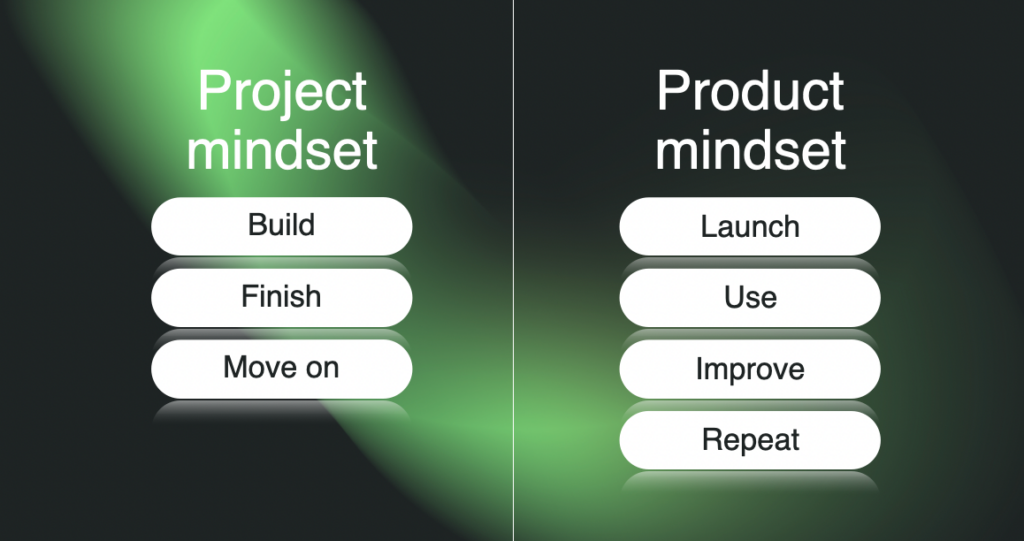
That cycle doesn’t stop. If you wait until an AI workflow is perfect before using it, you’ll wait forever. If you expect version one to be fully reliable, you’ll be disappointed. The real value comes from building, testing, learning, and improving. This matters for marketers because the temptation is always to look for a finished, polished answer. But in practice, the teams getting the most out of AI are the ones willing to start a little messy and iterate their way forward.
In other words, don’t wait for perfect. Build useful.
4. Every AI workflow needs an owner
Once you accept that AI is iterative, the next step becomes obvious. Every AI workflow needs a human owner. Not someone who launches it once and disappears. Someone who manages it.
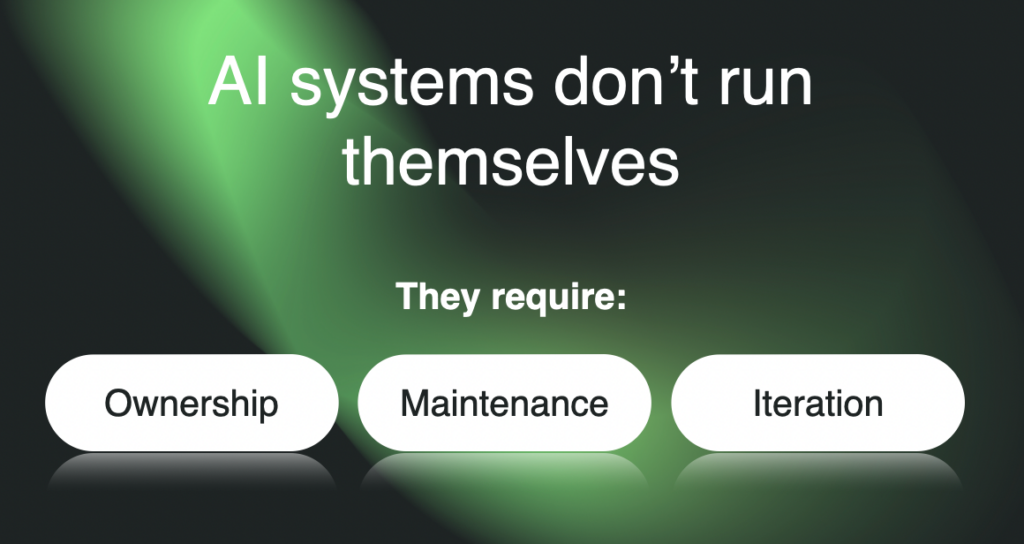
That means reviewing outputs, spotting bad behavior, collecting feedback, updating the logic, retraining the prompts, and making sure the system still does what it’s supposed to do as models and tools evolve. One of the best lines from the session was that AI agents are a lot like managing very smart kids. They can be impressively capable one minute and then do something completely ridiculous the next.
That is funny, but it is also the job description. If an AI tool is part of your operations, somebody has to supervise it. Somebody has to notice when it starts drifting. Somebody has to keep it aligned with reality. That’s especially true in customer-facing use cases. Omnisend shared that their AI support agent now fully resolves about 40% of support conversations at a quality level comparable to human support. That is a huge win. But it did not happen because they launched an AI support feature and walked away. It happened because real people were assigned to maintain and improve it.
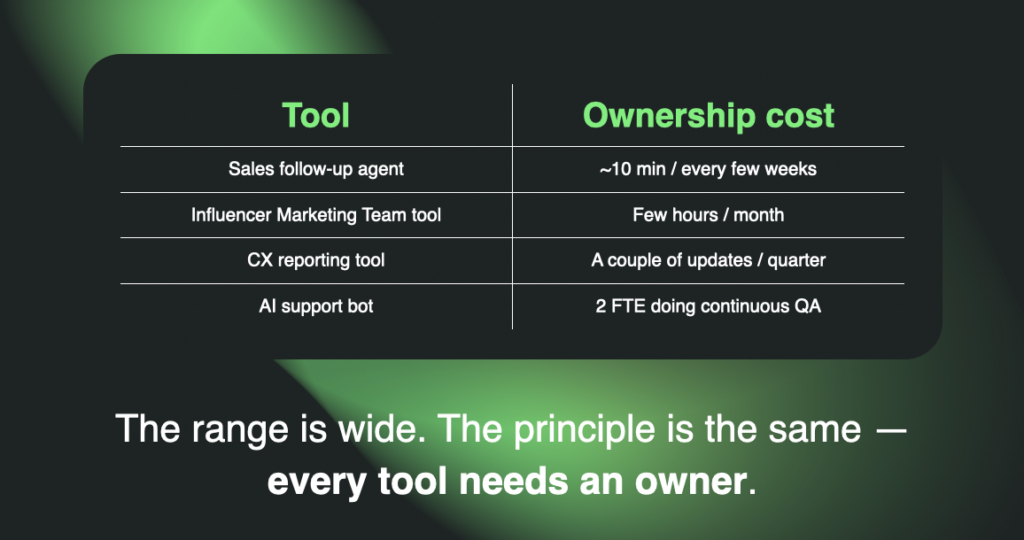
So if you’re building AI into your business, don’t just ask what the tool does. Ask who owns it after launch.
5. Use AI to free up existing work before inventing new work
This is another place where teams get distracted.
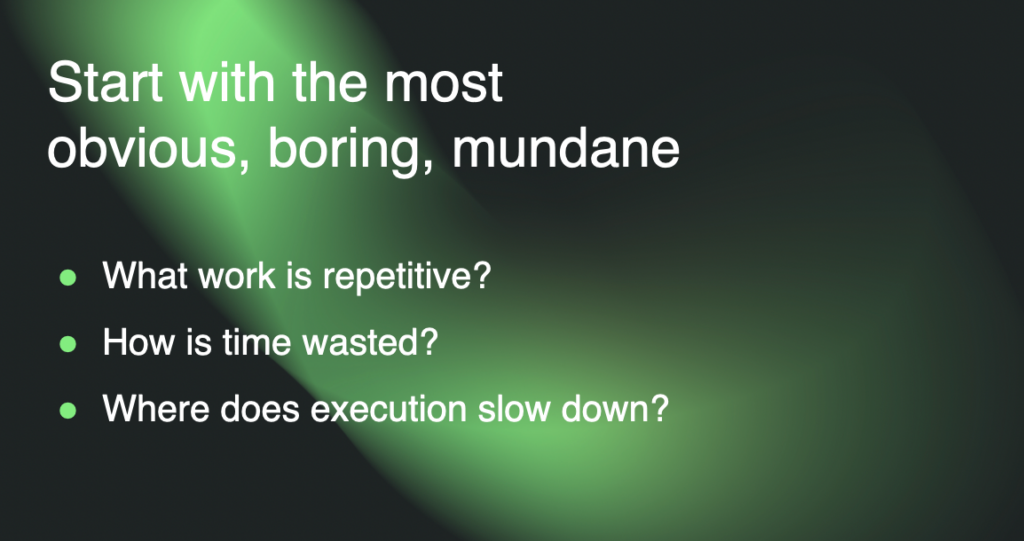
AI makes people creative. Suddenly there are a hundred new things you could do. New content streams, new workflows, new automations, new projects, new internal tools. And while some of that is exciting, it can also become a form of avoidance. Because the best first use of AI is usually not creating brand-new work. It is freeing up time inside work that already exists. That means looking at your current workflow and asking a more disciplined question:
- Where are we spending repetitive time right now?
- What are the routine steps that slow us down, but still need to happen?
That’s where AI has the highest short-term leverage.
This is exactly why some of the most-used AI features inside Omnisend are not flashy. Subject line generators. Preheader generation. Email copy support. Segment builders. Form builders. These are not revolutionary new workflows. They are existing tasks that marketers already have to do over and over again.
And that is precisely why they matter. The fastest way to get value from AI is to remove friction from the work your team is already doing every week. Once that time is freed up, then you can decide what higher-value work deserves the space you just created.
6. AI is not replacing your team. It is changing what “good” looks like
The last lesson is the one leaders need to communicate clearly. AI is not creating a competition between humans and machines. It is creating a competition between teams that know how to use AI well and teams that do not.
That is a very different framing. The best creative teams are not losing because AI can suddenly make beautiful images. They are winning because they understand what good creative looks like and can now use AI as another tool to get there faster.
The best writers are not losing because AI can draft copy. They are winning because they know how to guide it, shape it, sharpen it, and tell when it’s wrong. The best operators are not losing because AI can automate steps. They are winning because they know which steps should be automated and how to supervise the system once they are.
That’s the real shift. Individual contributors are increasingly becoming managers of systems, not just doers of tasks. And yes, that can feel uncomfortable at first. Especially for people whose identity is tied to execution. But that shift is already here. The teams that embrace it will get stronger.
What this looks like in practice for marketers
If you’re running a lean marketing team, the actionable move here is not to build an AI operating system overnight. It’s to pick one part of your existing workflow and improve it. If your team writes a lot of campaigns, start with subject lines and first drafts. If segmentation slows you down, start there. If you’re constantly reviewing creative or support interactions, look for a narrow review use case. If follow-up is inconsistent after calls, make that the first experiment. The point is not to be impressive. The point is to be useful. Because once AI starts saving time in one place, your team gets buy-in. Once they get buy-in, they use it more. Once they use it more, they start seeing where else it can help.
That’s how adoption compounds.
The bigger takeaway
The companies that get the most out of AI will not be the ones with the fanciest demos.They’ll be the ones that operationalize it. They’ll create time for learning. They’ll start with narrow use cases. They’ll iterate instead of waiting for perfection. They’ll assign owners. They’ll focus on freeing up existing work first. And they’ll help their teams evolve from pure executors into managers of intelligent systems.
That’s what AI-first actually looks like. Just better systems, built deliberately, one useful workflow at a time.


